Home > Case Studies > G-gen Inc.
The reasons they chose SYSTEMI: "proposal strength" and "a sense of speed" — end to end from PoC through technology selection to implementation
G-gen Inc. | IT/Cloud | New service development & payment system
COMPANY OVERVIEW
A cloud integrator specializing in Google Cloud
A cloud integrator focused on Google Cloud. Headcount of 120.
CHALLENGES
Looking for a partner with expertise in payment systems
01
Looking for a development partner with expertise in the payment system needed to build an education service
They compared and evaluated more than 10 companies. The difference came down to the quality and speed of the proposals.
SYSTEMI'S APPROACH
Moving from organizing payment requirements all the way to production release without ever breaking the chain of decisions
Requirements hearing and technology selection proposal
Selected the technology after understanding the payment flow of the education business. Compared and proposed multiple payment gateways.
Submitting the system architecture diagram and proposal document
Put together a complete set, from the architecture through to the implementation roadmap.
Implementing the payment system using the Stripe API
Fully supported credit card and convenience-store payments, subscriptions, and refund processing.
Production release and ongoing operation
Running with zero issues since its July 2023 release. The engagement continues today.
RESULTS
The results that remained in operation
Fully absorbed a complex payment flow
Credit card, convenience store & refunds
Reduced management cost
Stripe integration eliminated manual work
"I think the ability to hand a whole job over and have it taken off your plate is one of SYSTEMI's weapons. There aren't many partner companies that will think things through with you all the way from research to proposal."
— Mr. Ketsuzuka (cloud integrator, 120 employees)
INTERVIEW
Among many development partners, the reasons they chose SYSTEMI: "proposal strength" and "a sense of speed"
We spoke with Mr. Ketsuzuka of G-gen Inc., a cloud integrator built around Google Cloud, about how they searched for a partner with payment-system expertise when building a learning service, and why they chose SYSTEMI.

Q
Could you tell us why you chose SYSTEMI as your development partner?
Mr. Ketsuzuka
Thankfully, inquiries for projects have been increasing lately, and we've had an ongoing shortage of developers. So we needed development partners to secure people for us, and we reached out to several companies. With most partners, though, the proposals tend to be people-focused — "we can offer this many people in such-and-such month."
Against that backdrop, SYSTEMI proposes from the system architecture diagram and technology selection on up. This time too, they gave us a system proposal document, and they went so far as to grasp the requirements and propose details like "this kind of API development will be needed." When a partner proposes to that level, it lowers our management and communication costs and makes things easier.
We were short on the resources to handle the development part we'd requested in-house, so it was an enormous help. We've also been working with them since July 2023, and in most cases we ask them to handle everything from effort estimation to technical proposals. With their track record, there was a certain degree of trust there from the start.
Q
What kind of development did SYSTEMI actually take on?
SYSTEMI project lead
The project as a whole was building a certain education service, and our part was the payment system within it. We integrated Stripe's API into the service. It needed to support both credit card and convenience-store payments, and we had to make sure the payment processing fit each of those business flows.
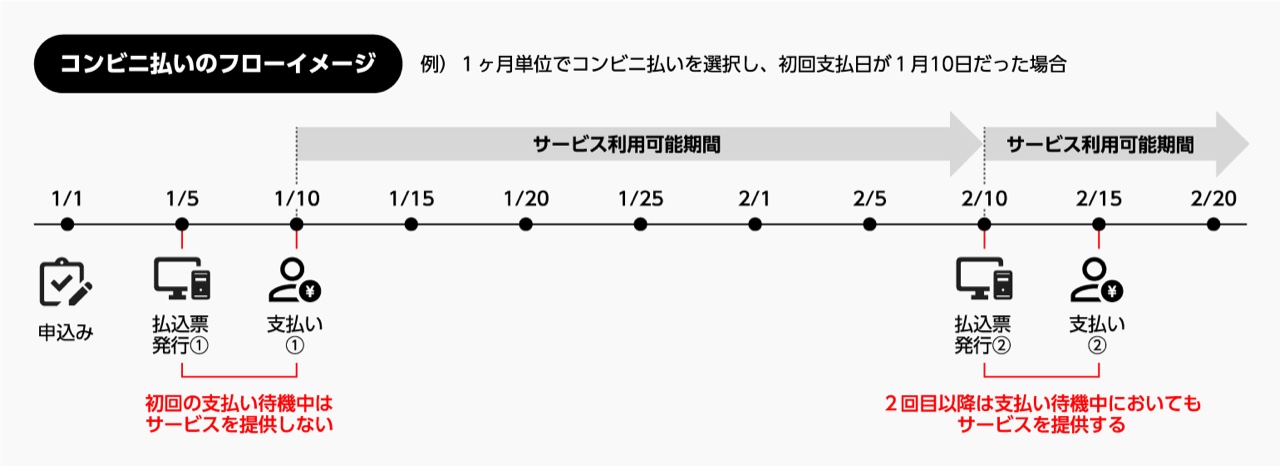
For example, invoice payments involve a flow of "finalizing the billed amount, creating and sending the invoice, then confirming receipt of payment," whereas with credit cards, finalizing the charge means it's billed immediately. Absorbing that difference in flows was the hardest part this time. Convenience-store payments have a complex combination of payment status and service provision, with different logic for the initial sign-up, recurring billing, and the trial period. Stripe is originally an overseas service, and there was little documentation on convenience-store payments, so it required careful research and a lot of trial and error.
Mr. Ketsuzuka
By collaborating with SYSTEMI, who have plenty of experience handling payment systems, I believe we were able to deliver the service to our customers more quickly.
Q
If there are points you'd recommend about SYSTEMI as a development partner, could you share them?
Mr. Ketsuzuka
The best thing about SYSTEMI is, above all, their sense of speed. We ask them for proposals on other projects too, and they get their hands moving right from the PoC (proof of concept) stage. For instance, when we consult them about a data analysis project, they do the technical investigation and come back with "here's an angle you could take." I feel their proposal speed is extremely fast.
Also, being able to "hand over a whole job and have it taken off your plate" is a major point of differentiation from other companies. There aren't many partner companies that will think things through with you all the way from research to proposal. When there's something we lack the expertise for, or that we can't fully solve internally, we can think, "Let's try consulting SYSTEMI." They're a company that truly deserves the title of "partner."
FDE PERSPECTIVE
A project like this is easier to reproduce when the requirements are sorted out further upstream
Closing gaps in payment requirements first
We take stock at the very start of the issues that break a design when they're added later — initial charges, recurring billing, refunds, failure handling, accounting integration, and so on.
Confirming technical feasibility early
By looking ahead at Stripe's scope of applicability, webhook design, operational load, and audit requirements, we improve both the persuasiveness of the proposal and the accuracy of the landing.
Even in the AI era, upstream precision determines the outcome
Precisely because there are now more ways to speed up implementation, how you frame the initial question matters. By stepping in on the front line as an FDE, we can raise the "precision before you build" — that's the distinguishing feature.
TECH STACK
Tech stack and payment architecture
Next.js
TypeScript
Stripe API
GCP (Cloud Run)
Cloud SQL (PostgreSQL)
GitHub Actions
As the payment platform for an education service, we implemented subscription plus convenience-store payment support using the Stripe API. The frontend builds the payment flow with Next.js Server Actions, with a configuration that receives webhook processing on Cloud Run (serverless).
Payment flows supported
✓ Credit card (initial & recurring billing)
✓ Convenience-store payment (Konbini Payment)
✓ Retry and reminder emails on payment failure
✓ Cancellation & plan changes (proration calculation)
✓ Admin console (billing, refunds, customer management)
STRIPE INTEGRATION FLOW
UserNext.js frontend
→
Stripe.jsElements / PaymentIntent
↓ Webhook
Cloud RunWebhook Handler
Cloud SQLBilling state management
↓
Email notificationsSendGrid
Admin consoleStripe Dashboard
Considering new service development?
From technology selection to implementation, we'll move forward together with you.
Get in touch